How to Open a Business Bank Account in Poland Without Local Residency
Traditional Banks vs. Strict AML Directives
Traditional Polish banks operate under stringent European Anti-Money Laundering (AML) directives, meaning non-resident directors usually face rigorous KYC checks and a mandatory in-person branch visit. Remote account opening remains extremely rare for foreign-owned entities.
In our practice tracking CEE markets, we consistently see compliance officers rejecting applications that lack transparent ownership layers. Legacy financial institutions will not offer you a seamless digital onboarding experience. They scrutinize every beneficial owner against global high-risk jurisdiction lists to protect their operating licenses. Polish regulators levy massive financial penalties for AML failures, forcing banks to act defensively.
You must understand that the compliance officer holds absolute veto power over your application. They follow a rigid internal matrix that evaluates your nationality, corporate structure, and capital origins. Presenting a flawless business case becomes your primary objective. Do not underestimate the depth of their corporate background checks.
Securing an account entirely from abroad rarely works in 2026. While some banks theoretically accept an apostilled Power of Attorney (PoA), actual approvals via proxies have plummeted. Expect to book a flight to Warsaw or Krakow to sign the final paperwork and submit a physical specimen signature.
The Impact of EU Directives on Local Banking
The evolving European regulatory landscape severely impacts non-resident banking access. Poland implements these directives with characteristic bureaucratic precision. You will face enhanced due diligence if your corporate structure involves trusts, foundations, or offshore holding companies.
Banks actively look for reasons to classify your business as high-risk. Operating in sectors like cryptocurrency, precious metals, or high-volume algorithmic trading triggers immediate enhanced scrutiny. Prepare extensive documentation detailing your exact transaction flow to satisfy these stringent risk assessments.
The Reality of Video KYC
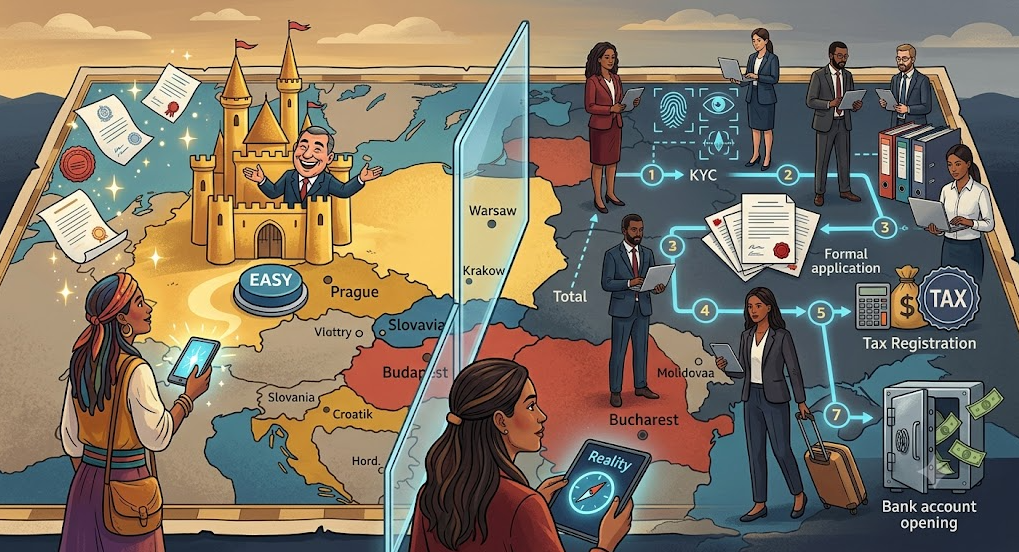
A few progressive Polish banks now test video verification for corporate clients. However, this feature usually applies only to single-shareholder structures or residents holding a Polish PESEL number. Complex, multi-jurisdictional entities still trigger manual, in-person verification protocols.
You should not base your market entry strategy on the assumption of remote approval. Prepare a travel budget and schedule a firm date for your management board to visit the branch. Treating the bank meeting with the same seriousness as a major client pitch yields the best results.
The Requirement for Active Polish Contracts
Polish banks require proof of local economic substance, meaning you must provide active contracts, invoices, or letters of intent with Polish counterparties to justify opening a local account. Shell companies without regional ties face immediate rejection.
Data from recent corporate setups shows that presenting a clear business plan accelerates the approval process significantly. You cannot simply register a limited liability company (Sp. z o.o.) and expect automatic banking access. Compliance departments demand a legitimate commercial reason for your presence in the country.
Supplying evidence of local business activities proves crucial. Bring letters of intent from local distributors, signed lease agreements, or contracts with Polish service providers. These documents validate your need for domestic banking infrastructure. Silence on local operations guarantees a swift and final rejection.
Financial institutions heavily penalize “letterbox” structures that lack local employees or physical offices. Relying solely on a cheap virtual office address raises immediate red flags during the KYC interview. Establishing genuine local substance protects your banking access long-term.
Proving Economic Substance in 2026
Renting a physical office space provides the strongest evidence of economic substance. Banks view signed commercial leases as proof of a long-term commitment to the Polish market. Even a dedicated desk in a reputable coworking space performs better than a mass-market virtual address.
Hiring local staff also validates your operational footprint. Registering employees with the Polish Social Insurance Institution (ZUS) creates an undeniable paper trail of economic activity. Show the bank your local payroll obligations to justify the absolute need for a domestic PLN account.
Digital Alternatives: EMI and Neobank Options
Electronic Money Institutions (EMIs) and neobanks offer non-residents a faster, fully digital alternative to traditional Polish banks, providing multi-currency accounts and virtual Polish IBANs without requiring a physical visit.
You might bypass legacy banking hurdles entirely by leveraging digital financial platforms. Services like Revolut Business, Wise, or regional EMI equivalents allow you to handle daily transactions smoothly. They conduct their KYC interviews via remote video calls, eliminating the need for international travel.
Modern neobanks appeal strongly to agile cross-border entrepreneurs. They issue virtual corporate cards instantly, integrate seamlessly with popular accounting software, and provide highly competitive foreign exchange rates. However, you must carefully evaluate their compatibility with the Polish tax ecosystem.
Operating without a traditional bank carries specific limitations regarding local tax compliance. You need an account that integrates directly with the Polish Ministry of Finance’s systems. Certain tax mechanisms require dedicated domestic accounts that foreign EMIs cannot always provide.
Integrating Digital Accounts with Polish Tax Frameworks
The Polish VAT “white list” remains a critical hurdle for digital banking users. Your business contractors will check this official registry before paying invoices exceeding 15,000 PLN. If your EMI account does not appear on this list, local partners may legally refuse to transfer funds.
The mandatory split payment mechanism (MPP) poses another significant challenge. Polish B2B transactions in specific industries require buyers to send the VAT amount to a dedicated, locked VAT account. Many foreign-based EMIs simply lack the technical infrastructure to support these specialized Polish VAT sub-accounts.
| Banking Feature | Traditional Polish Banks | EMIs / Neobank Alternatives |
|---|---|---|
| Physical Visit Required | Yes, almost always mandatory | No, fully remote video KYC |
| Average Onboarding Time | 2 to 4 weeks | 2 to 5 business days |
| Polish VAT White List Compatibility | Fully supported automatically | Requires manual verification; often limited |
| Split Payment (MPP) Support | Built-in regulatory compliance | Often unsupported or highly problematic |
Document Checklist: NIP, KRS, and Passports
To open a business account, you must present your company’s KRS (National Court Register) extract, NIP (Tax Identification Number), an active REGON, and valid passports for all board members and ultimate beneficial owners.
Gathering the correct paperwork dictates the speed of your banking approval. As business and legal analysts working directly with cross-border frameworks, we constantly advise clients to prepare these files weeks in advance. Missing a single signature or official stamp derails the entire procedure instantly.
Managing foreign corporate shareholders adds a massive layer of complexity. You must map out the entire ownership structure down to the living, breathing natural persons. Banks demand apostilled corporate extracts from your home jurisdiction to verify every holding entity in the chain.
Sworn translations represent another strict, non-negotiable step. Polish banks only accept foreign documents translated into Polish by a locally certified sworn translator. Standard agency translations hold no legal weight, and compliance teams will reject them without a second thought.
Navigating UBO Declarations and KSeF
Filing accurate Ultimate Beneficial Owner (UBO) data is a mandatory legal requirement in Poland. You must register your UBOs in the Central Register of Beneficial Owners (CRBR) within 14 days of company incorporation. Banks cross-reference your application against this exact database before unlocking the account.
The mandatory rollout of KSeF (National e-Invoicing System) in 2026 further tightens the documentation net. Your bank account details must align perfectly with your official tax filings to ensure seamless B2B invoicing. Any mismatch between your banking records and your tax registry will cause severe payment delays.
Managing Source of Funds Verification
Tracing the origin of your initial share capital represents a critical phase of the onboarding journey. Regulators require banks to verify exactly how you acquired the funds used to capitalize the Polish entity. You must provide personal bank statements or corporate financial reports from your parent company.
Vague explanations regarding wealth generation will stall your application indefinitely. Provide clear, documented narratives connecting your past business successes to your current investment in Poland. Transparency accelerates trust and satisfies the stringent demands of the compliance department.
Frequently Asked Questions (FAQ)
Can a non-resident open a business bank account in Poland entirely online?
Generally, no. While some EMIs offer remote onboarding, traditional Polish banks require at least one board member to attend an in-person branch meeting to satisfy strict AML identity verification protocols.
What is the Polish VAT white list, and why does my bank matter?
The VAT white list is a public government registry of verified business bank accounts. If your account isn’t listed, Polish B2B contractors cannot legally deduct payments over 15,000 PLN as business expenses.
Do I need a Polish PESEL number to open a corporate account?
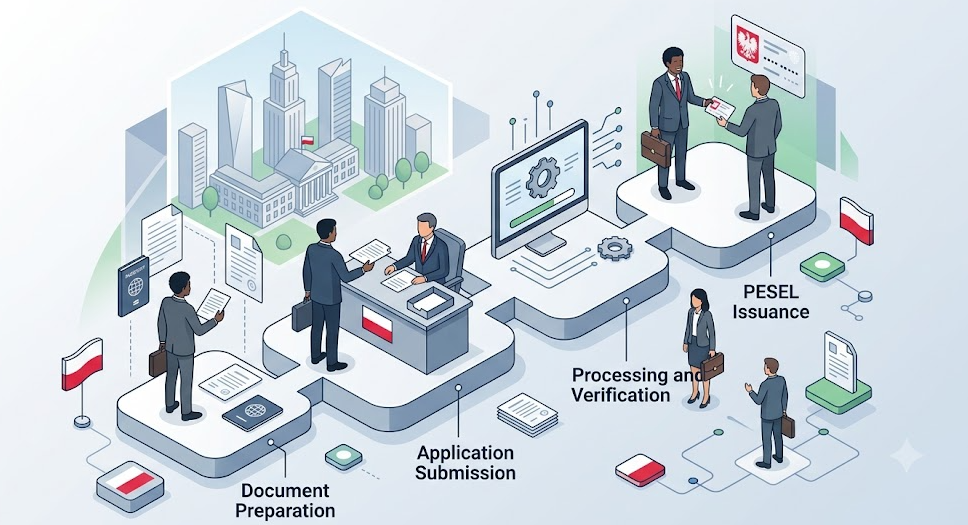
A PESEL number is not strictly mandatory for foreign board members. However, possessing one significantly accelerates the bank’s background checks and reduces administrative friction during the KYC process.
Are digital neobanks a perfect replacement for traditional Polish banks?
Not entirely. While neobanks offer impressive speed and multi-currency flexibility, many lack the infrastructure to support the mandatory Polish split payment mechanism (MPP) required for certain local B2B transactions.