
Krakow vs. Wroclaw: Choosing the Right CEE Hub for AI & Engineering
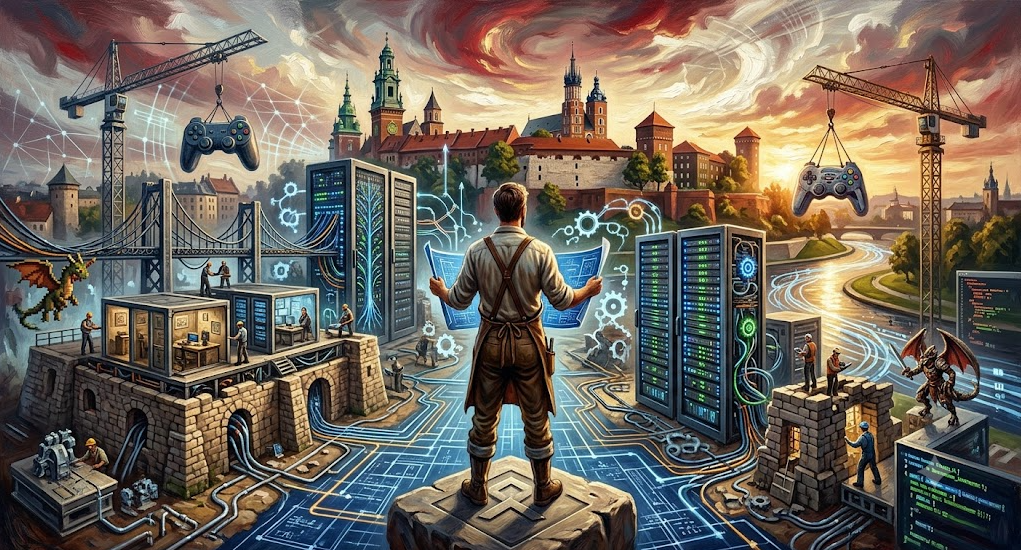
Krakow: The Deep-Tech and AI Epicenter
Krakow stands as Poland’s premier deep-tech and artificial intelligence hub, housing over 65,000 IT specialists and the cutting-edge Gaia AI Factory infrastructure in 2026.
In our practice tracking CEE markets, Krakow consistently emerges as the primary choice for advanced software engineering and research. The city has transitioned completely from a legacy cost-oriented location to a hub defined by operational maturity. Leading multinational companies now locate their most sophisticated R&D centers right here. This transition reflects a deeper regional evolution toward high-value knowledge services.
The European Commission’s recent integration of the Gaia AI Factory firmly positions the region within the European artificial intelligence network. Advanced infrastructure supports cutting-edge model development and heavy computational research for global markets. This strategic hardware availability directly fuels the local deep-tech ecosystem. Engineers gain immediate access to the supercomputing resources required for next-generation generative AI frameworks.
Global investors rely heavily on the region’s 250+ international IT hubs. Recruitment efforts easily secure specialized engineers who possess deep domain expertise in machine learning and enterprise cloud architecture. The talent pool grows by 5% annually, ensuring a steady supply of highly qualified professionals. This critical mass of experts allows companies to scale entire departments in a matter of months rather than years.
Specialized software agencies in Krakow excel at delivering full-stack solutions. They routinely build complex predictive models and custom AI platforms from scratch. The local market rewards professionals who seamlessly blend technical depth with strategic product thinking. Arriving foreign executives immediately notice a highly collaborative environment bridging academia and private enterprise.
Dual-use technologies and the space sector currently drive the next phase of Krakow’s evolution. Private contractors and public institutions collaborate closely on projects requiring immense computational power. Enterprises gain immediate leverage by tapping into this highly specialized knowledge base. The city actively fosters a culture of deep technical exploration.
Data analytics and advanced cloud services remain absolute pillars of the local economy. European data privacy laws force companies to localize their machine learning infrastructure. Krakow perfectly answers this demand by offering GDPR-compliant, high-performance computing environments. Corporate intellectual property remains totally secure within a rigorous legal framework.
Wroclaw: Industry 4.0 and Automotive Tech
Wroclaw dominates Central Europe as the leading center for Industry 4.0 and automotive technology, driven by massive 2026 investments in smart mobility and connected infrastructure.
Data from recent corporate setups shows Wroclaw rapidly expanding its dominance in the smart mobility sector. Heavyweights in the automotive industry select this city to build connected vehicle infrastructure and cloud solutions. The local ecosystem heavily supports IoT, cybersecurity, and digital manufacturing. Technology leaders benefit from a unique concentration of hardware and software integration experts.
Visitors encounter a highly mature network of advanced engineering operations. The nickname “Polish Silicon Valley” accurately reflects the concentration of hardware and software synergy. Engineers here routinely develop platforms that serve millions of end-users across Europe. Mobile application development and embedded systems design form the absolute backbone of Wroclaw’s technical output.
Regional initiatives aggressively accelerate digital transformation across Lower Silesia. The focus on test-before-invest methodologies allows enterprises to scale complex Industry 4.0 solutions safely. Tech teams benefit from a tightly integrated network of automotive manufacturers and specialized software agencies. Financial resources flow steadily into the region to support continuous technological upgrades.
The operational environment explicitly favors large-scale industrial deployments. Teams in Wroclaw specialize in securing connected vehicle infrastructure against modern digital threats. They architect the precise technology backbones required for autonomous driving and massive fleet management. An investment here taps directly into a workforce engineered for industrial-grade reliability.
Cloud infrastructure development represents a massive growth sector for the city. Specialists in Wroclaw build the exact technology backbones supporting connected services across Europe. Exceptional AWS, Azure, and GCP architects stand ready to deploy enterprise-grade systems. Their expertise directly enables seamless remote vehicle management and real-time battery monitoring.
The macroeconomic stability of Lower Silesia attracts long-term industrial commitments. Foreign entities face minimal regulatory friction when establishing manufacturing or R&D facilities. The local government actively incentivizes technological innovation through specialized economic zones. This highly cooperative environment drastically reduces initial setup time and operational risk.
Talent Pool Dynamics and Technical Universities
Krakow and Wroclaw collectively graduate tens of thousands of STEM students annually, supported directly by elite institutions like the AGH University of Krakow and Wroclaw University of Science and Technology.
Academic density defines the long-term viability of any technology hub. Krakow alone hosts 17 higher education institutions, educating more than 120,000 students every academic year. This massive pipeline guarantees continuous access to junior developers and academic researchers. Applied research centers function as direct talent incubators for arriving foreign investors.
We consistently see that Wroclaw University of Science and Technology directly feeds the automotive and IoT sectors. Their curriculum closely mirrors the immediate technical demands of international R&D centers. Hiring managers rarely face structural skill shortages when recruiting for specialized engineering roles. The steady influx of STEM graduates maintains a balanced and highly competitive labor market.
Competition for senior talent remains fierce across both metropolitan areas. However, engineers exhibit strong loyalty to projects offering complex, global challenges. Tech leaders should prioritize employer branding and cutting-edge technology stacks to attract the top 10% of developers. High salaries alone no longer guarantee successful recruitment or long-term retention.
Senior developers expect clear pathways to architectural or principal roles. They demand transparent management and the autonomy to influence core product decisions. A winning recruitment strategy must emphasize technical excellence and international impact. Companies that treat Polish hubs as mere execution centers constantly struggle to retain elite engineers.
The profile of an ideal IT specialist shifts rapidly in 2026. The market actively rewards engineers who combine technical depth with strong domain expertise. Modern operations need developers who treat artificial intelligence as a practical engineering tool rather than a novelty. Universities continuously adapt their curricula to meet these evolving industry standards.
Collaboration between academia and local government creates a highly resilient ecosystem. Research grants and public funding regularly support joint ventures with private enterprises. Organizations can establish dedicated research labs within university campuses to secure early access to top students. This proactive approach significantly lowers long-term recruitment costs.
Cost of Operations and Salary Expectations
In 2026, senior software engineers in both cities expect monthly B2B rates between PLN 16,000 and PLN 30,000, offering up to 60% savings compared to United States equivalents.
Financial predictability drives strategic relocation decisions. Setting up a dedicated team in southern Poland yields massive cost advantages without sacrificing architectural quality. Standard B2B developer contracts completely dominate the senior hiring landscape. This contracting model drastically simplifies taxation and payroll administration for foreign entities.
Krakow generally commands a slight premium over Wroclaw due to the concentration of elite financial technology and AI hubs. Average annual compensation for a mid-level engineer hovers around PLN 180,000. Operating costs remain 40-60% lower than in Western European capitals like Berlin or London. Smart investors secure Tier-1 talent at a fraction of the traditional metropolitan cost.
Office space and administrative overhead align closely between the two cities. Planners must factor in minor regional differences, but the overall total cost of ownership remains highly competitive. Real estate markets in both locations provide abundant Class A office spaces designed for modern tech operations. Turnkey solutions and flexible leases allow for rapid scaling and pivoting.
A senior software engineer operating via a B2B contract typically invoices between PLN 16,000 and PLN 30,000 monthly. This translates to roughly $48,000 to $90,000 annually. Tech directors achieve optimal cost efficiency by building balanced teams of mid-level and senior professionals. Heavy reliance on junior staff often backfires by significantly increasing internal management overhead.
Understanding the nuances of hiring models dictates your ultimate financial success. Foreign companies utilize an Employer of Record (EoR) to quickly onboard permanent staff without establishing a local legal entity. Agencies offer dedicated teams that drastically reduce your internal management overhead. Direct B2B contracting remains the absolute cheapest route but requires strong internal vetting.
Leaders must account for the invisible costs of team integration and technical management. Planning for adequate project management oversight prevents costly delivery delays. A poorly managed remote team rapidly consumes any initial financial savings. Properly structured Polish operations consistently deliver high-quality code at highly sustainable price points.
2026 Operational Comparison: Krakow vs. Wroclaw
| Metric / Characteristic | Krakow | Wroclaw |
|---|---|---|
| Primary Technical Focus | Generative AI, FinTech, Deep-Tech | Industry 4.0, Automotive, IoT Apps |
| Estimated IT Talent Pool (2026) | 65,000+ Specialists | 55,000+ Specialists |
| Senior Engineer Salary (Monthly B2B) | PLN 17,000 – 30,000 | PLN 16,000 – 29,000 |
| Key Academic Feeders | AGH University, Jagiellonian University | Wroclaw Univ. of Science and Technology |
| Defining 2026 Tech Infrastructure | Gaia AI Factory | WRO4digITal 2.0 Hub |
| Best Hiring Model for Seniors | Direct B2B or Employer of Record (EoR) | Direct B2B or Employer of Record (EoR) |
Frequently Asked Questions (FAQ)
Which city is better for setting up an AI research team?
Krakow holds a distinct advantage for pure artificial intelligence research. The city hosts the state-backed Gaia AI Factory and a larger concentration of deep-tech talent with highly specialized machine learning expertise.
Are B2B contracts still the standard in Poland in 2026?
Yes, B2B (Business-to-Business) contracting remains the absolute dominant model. It acts as the most tax-efficient method for hiring mid-level and senior IT specialists across both Krakow and Wroclaw.
How do operating costs compare to Western Europe?
Both cities reliably offer a 40% to 60% reduction in total cost of ownership compared to tech hubs like London or Munich. This stems primarily from lower salaries and highly competitive Class A office lease rates.
What is the typical notice period for senior developers?
Under a standard B2B contract, professional notice periods typically range from one to three months. Recruitment managers must account for this timeline when planning aggressive hiring sprints or project kickoffs.